


- Home
- About
- Personal Injury
- Car Accidents
- Truck Accidents
- Motorcycle Accidents
- Pedestrian Accidents
- Defective Products
- Premises Liability
- Catastrophic Injuries
- Medical Malpractice
- Nursing Home Negligence
- Sexual Abuse
- Educational Abuse
- Wrongful Death
- Scooter Accidents
- Underinsured Motorist Accidents
- Uninsured Motorist Accidents
- Workers’ Compensation
- Case Results
- Scholarship
- Blog
- Contact
Insurance Says You Were Partly at Fault for Your Motorcycle Crash? Why That's Their Favorite Move in Maryland
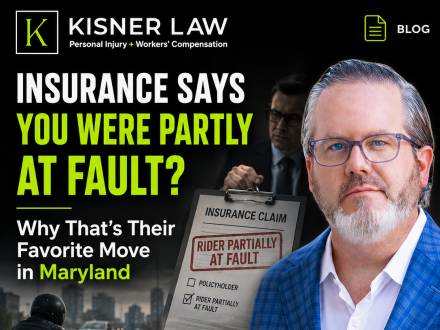
If you’ve just heard from an adjuster and you’re thinking, "he insurance company says I was partly at fault for my crash in Maryland can they do that"—you’re not overreacting. You’re reacting to a very common tactic that catches many motorcycle riders off guard right after a crash, when everything already feels chaotic and uncertain.
In Maryland, fault isn’t just about assigning blame—it can determine whether you get paid anything at all. Insurance companies understand this better than most riders do. That’s why, in the early stages of a claim, they often try to shift even a small percentage of responsibility onto you. For bikers, who are already dealing with bias on the road and in claims conversations, this can feel like the system is stacked against them from the start.
Here’s the seldom-discussed reality: this "you were partly at fault" argument is often less about the facts of your crash and more about reducing what the insurer has to pay—or avoiding payment entirely under Maryland’s strict fault rules. Even a minor detail in your statement, or a rushed comment at the scene, can be used later to weaken your claim.
This matters right now because the timing of your response can shape the entire outcome of your case. What you say, when you say it, and how fault is framed in the first days after the crash can quietly decide whether your recovery is protected or compromised
The Real Problem Isn’t "Fault" — It’s How Fault Gets Rewritten After the Crash
When riders search "the insurance company says I was partly at fault for my crash in Maryland can they do that", they’re usually focused on one question: Is this fair? But the real issue is not fairness—it’s control over the story of what happened.
After a motorcycle crash, the first version of events is rarely the most accurate. It’s simply the most useful to whoever documents it first. Insurance companies know this. So the core problem isn’t just that they are assigning partial fault—it’s that they are often reframing early, incomplete information into a legal narrative that reduces what they owe.
Why Riders Misread What’s Really Happening
Most bikers assume fault is determined later, after all evidence is reviewed. In reality, insurers begin shaping liability within hours or days of the crash. A short recorded statement, a police summary written under time pressure, or even a vague comment like "I didn’t see them in time" can become the foundation for a partial fault argument.
This is where the blind spot appears: riders think they are "just explaining what happened," while insurers are already building a liability percentage model.
The Hidden Dynamic Most People Miss
Here’s the expert insight that changes everything: insurance adjusters don’t need to prove you were mostly at fault—they only need to create enough uncertainty to reduce their payout.
In Maryland, even a small shift in perceived responsibility can significantly affect recovery under contributory negligence rules. That means the insurer’s strategy often focuses on finding any angle—speed, lane position, reaction time—to argue you contributed even slightly to the crash outcome.
So when a rider asks, "can they say I was partly at fault in a motorcycle crash in Maryland?" the deeper truth is yes—but often not because the facts clearly support it, but because the system rewards plausible doubt, not absolute clarity.
The Core Problem Beneath the Surface
At its root, this isn’t just a dispute about what happened on the road. It’s a timing and narrative problem. The side that defines the story first often influences everything that follows. And most riders don’t realize they’re already in that narrative battle from the moment the crash report begins.
The First 48 Hours Quietly Decide How Your Crash Is Interpreted
When riders ask "he insurance company says I was partly at fault for my crash in Maryland can they do that", they usually imagine a long investigation where every detail is carefully weighed. What most people don’t realize is that the real "decision window" often opens and closes far earlier—sometimes within the first 24 to 48 hours after the crash.
The Hidden System: Early Information Becomes the Default Truth
In practice, insurance claims don’t start with full evidence. They start with fragments: a police report written under time pressure, a brief adjuster note, and whatever the rider said while injured, stressed, or confused. These fragments don’t just sit in a file—they become the default version of events that everything else is compared against.
This is where a critical but rarely discussed dynamic appears: once an early version of fault is recorded, later evidence is often interpreted through that lens instead of replacing it.
So when riders later think, "can insurance decide I’m partially at fault in a Maryland motorcycle crash?", the more accurate issue is that the system often allows an early interpretation to harden before the full picture ever develops.
Why Motorcycle Riders Are Especially Vulnerable in This Window
Motorcycle crashes tend to create more severe injuries, confusion, and delayed memory recall compared to car accidents. Riders may not give a detailed statement immediately, or they may unintentionally say things that sound uncertain—like "I might have been going a little fast" or "I didn’t see the car until the last second."
Those small phrases can be reinterpreted later as partial responsibility signals, even if the real cause was another driver’s error.
According to the U.S. National Highway Traffic Safety Administration, motorcycle crashes frequently involve multiple contributing factors and complex impact dynamics that are not immediately clear at the scene:
NHTSA Motorcycle Safety Overview
The Overlooked Reality
The hidden factor is not just evidence collection—it’s evidence locking. Once an insurer builds its early liability narrative, every new detail is filtered through that structure. Riders often assume truth corrects the record over time, but in insurance systems, early interpretation has disproportionate influence unless it is actively challenged with stronger, later evidence.
This timing gap is where many motorcycle claims are quietly won or lost—long before most riders even realize a dispute has fully formed.
What Happens When "Partial Fault" Sticks to Your Case
When riders keep wondering "he insurance company says I was partly at fault for my crash in Maryland can they do that" but don’t actively challenge it early, the consequences are rarely immediate—but they are serious and often permanent in how the claim unfolds.
Financial Consequences: Reduced or Completely Lost Compensation
In Maryland, even a small finding of shared responsibility can drastically reduce or eliminate your recovery. If an insurer successfully frames you as even slightly at fault, they may lower settlement offers for medical bills, bike repairs, and lost income.
For example, a rider who depends on their motorcycle for daily commuting or gig work (like delivery or rideshare) might expect coverage for weeks of lost earnings. But once partial fault is accepted or left unchallenged, those income losses may be minimized or denied entirely, leaving you absorbing costs while still injured and unable to work.
Legal Consequences: A Claim That Quietly Weakens Over Time
If you don’t respond early to a partial fault motorcycle crash Maryland insurance claim, the insurer’s version of events becomes increasingly difficult to reverse. New evidence—like witness statements or camera footage—may still help, but it has to overcome an established narrative that already favors the insurance company.
The longer this narrative stands, the more "normal" it appears within the claim file.
Emotional Consequences: Pressure, Confusion, and Second-Guessing
Many riders start doubting themselves after hearing they might be partly at fault. You may replay the crash repeatedly, wondering if you missed something or reacted too slowly. That mental pressure is exactly what insurers rely on—because uncertainty often leads to acceptance of lower settlements just to "move on."
Long-Term Consequences: The Cost of a Damaged Record
Beyond this single claim, there’s a "future-you" impact. Once fault allocation is recorded in claim history, it can influence how future insurers evaluate risk, premiums, or credibility in later disputes.
The Real Risk Most Riders Miss
The biggest mistake isn’t just disagreement—it’s silence or delay. When partial fault is left unchallenged, it doesn’t stay neutral. It becomes the default assumption that shapes every next step of your case.
A Simple Decision Framework When Insurance Tries to Assign You Fault
When riders search "he insurance company says I was partly at fault for my crash in Maryland can they do that", what they really need isn’t panic or guesswork—it’s a clear way to respond under pressure. The goal is to avoid saying or doing anything that unintentionally strengthens a partial fault motorcycle crash Maryland insurance claim.
Below is a structured, practical framework you can use immediately after a crash or insurance contact.
Step 1: Pause the Narrative Before It Solidifies
What to do:
Do not give detailed recorded statements in the first interaction unless absolutely necessary.
Why it matters:
Early statements often become the "anchor version" of events in your file.
What to avoid:
Avoid guessing speeds, distances, or fault-related details.
Step 2: Separate Facts From Interpretation
What to do:
Stick only to observable facts: road conditions, direction of travel, time, and visible events.
Why it matters:
Insurance adjusters build fault percentages from interpretations, not just facts.
What to avoid:
Avoid emotional language like "I think" or "maybe I caused it."
Step 3: Understand How Maryland Fault Rules Change Everything
Maryland follows a strict approach where even small shared responsibility can block recovery entirely. That means a motorcycle crash partial fault insurance Maryland determination is not just a percentage—it can be a gatekeeper to compensation.
For general legal context on traffic safety and crash reporting standards, see the National Highway Traffic Safety Administration’s guidance on crash data interpretation:
NHTSA Crash Data and Reporting Standards
Step 4: Avoid Letting the First Version Become the Final Version
What to do:
Review all written or recorded statements carefully before they are finalized.
Why it matters:
Once a narrative is logged, it becomes the reference point for every later decision.
What to avoid:
Do not assume "clarifying later" will fully fix early admissions.
Step 5: Track Every Communication Like Evidence
What to do:
Keep records of calls, emails, and adjuster messages.
Why it matters:
Small inconsistencies can be used to support partial fault arguments.
The Core Decision Rule
If you are unsure, do not guess. In insurance fault disputes, uncertainty is safer than incorrect clarity.
A Strong Resolution Actually Looks Like After a Motorcycle Crash Claim
When riders first think "he insurance company says I was partly at fault for my crash in Maryland can they do that", the fear is usually about money. But the deeper issue is control—whether the insurer controls the narrative, or whether you maintain clarity and leverage throughout the claim.
A strong outcome in a motorcycle crash dispute isn’t just a higher settlement. It’s a structured, predictable process where fault is not casually assigned, and where decisions are based on verified facts—not early assumptions.
Weak Outcome: What Most Riders End Up Facing
In weaker outcomes, the rider accepts the insurer’s early framing of a motorcycle accident partial fault insurance Maryland scenario without challenge. The consequences usually look like this:
-
Financial instability: Reduced payout for medical care, bike repair, and lost wages
-
Loss of control: The insurer’s version of events becomes the default record
-
Time drain: Repeated back-and-forth requests for missing documentation
-
Emotional pressure: Constant doubt, frustration, and feeling dismissed
-
Long-term risk: A settled claim that quietly limits future negotiation power
In this version, the rider often feels like they are reacting instead of directing the process.
Strong Outcome: What Happens When the Process Is Handled Correctly
In a strong outcome, the rider maintains control over the factual record from the beginning. Early statements are measured, documentation is organized, and fault is not allowed to harden prematurely.
This leads to:
-
Financial stability: Compensation reflects actual damages, not reduced assumptions
-
Clarity and control: A consistent, evidence-based narrative is established early
-
Time efficiency: Fewer delays caused by corrections or disputes
-
Reduced emotional strain: Less second-guessing and uncertainty about "what went wrong"
-
Long-term protection: A cleaner claims history and reduced risk of inflated future premiums
Why Timing and Structure Change Everything
The difference between these outcomes often comes down to timing and discipline. Early missteps can lock in a weak narrative, while structured responses preserve leverage until all facts are reviewed properly.
According to the Insurance Information Institute, claim outcomes are heavily influenced by the quality and timing of information provided during the early stages of the process:
Insurance Information Institute – Claims Process Overview
The Future State Riders Actually Want
The real goal is not just winning a dispute—it is exiting the process with financial stability, reduced stress, and the confidence that the outcome reflects what actually happened, not what was assumed in the first 48 hours.
FAQs
1. Can insurance legally say I was partly at fault for my crash in Maryland?
Yes, an insurance company can argue that you were partly at fault after a motorcycle crash in Maryland, but that does not automatically make it correct. When people ask "he insurance company says I was partly at fault for my crash in Maryland can they do that", the real issue is whether their conclusion is supported by evidence or just early assumptions. In many cases, fault is still being evaluated and can be challenged. The key is understanding that their first assessment is not final.
2. Why is the insurance company saying I was partly at fault for my motorcycle crash in Maryland so quickly?
Insurance companies often raise partial fault early because it can reduce or limit what they have to pay. In a motorcycle crash partial fault Maryland insurance claim, early statements or reports may be used to justify this position. Riders are often still processing the crash, which makes this timing especially difficult. This is why early communication must be handled carefully.
3. What does it mean if I’m found partially at fault in a Maryland motorcycle accident claim?
If you are assigned partial fault, it means the insurer believes you contributed in some way to the crash. In Maryland, even a small percentage of fault can seriously affect compensation outcomes. Many riders misunderstand this and assume small fault percentages are harmless. In reality, it can significantly reduce or eliminate recovery depending on how liability is framed.
4. Can I still get compensation if the insurance company says I was partly at fault?
It depends on how fault is ultimately determined and documented. When dealing with a he insurance company says I was partly at fault for my crash in Maryland can they do that situation, the concern is not just the claim—it’s how much responsibility is assigned. If fault is successfully challenged or disproven, compensation may still be possible. If not, recovery may be reduced or denied.
5. How do insurance companies decide fault in a motorcycle crash in Maryland?
They rely on police reports, driver statements, witness accounts, and physical evidence from the scene. However, these elements are often interpreted rather than objectively fixed. In a Maryland motorcycle crash partial fault insurance dispute, interpretation plays a major role. This is why early statements and documentation can strongly influence outcomes.
6. What should I avoid saying if the insurance company says I might be partly at fault?
Avoid guessing details about speed, distance, or who caused the crash. Riders often unintentionally weaken their position when trying to "explain" too much. In cases involving insurance says I was partly at fault motorcycle crash Maryland, unclear or emotional statements can be misinterpreted later. Stick to clear, factual descriptions only.
7. Does partial fault always reduce my settlement in Maryland?
In most cases, yes. Even a small finding of shared responsibility can significantly affect compensation in Maryland. That is why motorcycle crash partial fault insurance Maryland disputes are taken seriously from the beginning. The final outcome depends on how strongly fault is proven or disputed.
8. What is the biggest mistake riders make after being told they are partly at fault?
The biggest mistake is accepting the insurance company’s version too quickly without questioning it. Many riders assume the first explanation is final, especially when dealing with stress after a crash. But in he insurance company says I was partly at fault for my crash in Maryland can they do that situations, early narratives are often incomplete. Delayed response or silence can make the issue harder to fix later.
9. How long does it take to resolve a disputed fault motorcycle claim in Maryland?
It can take weeks to several months depending on the complexity of evidence and disputes. When partial fault is involved, the process often takes longer because both sides review and challenge details. A Maryland motorcycle crash partial fault insurance claim usually requires back-and-forth communication before resolution. Delays are common when evidence is unclear or contested.
10. What can I do to protect myself if insurance says I was partly at fault?
The most important step is to avoid making rushed statements and to ensure all communication is accurate and consistent. Riders dealing with he insurance company says I was partly at fault for my crash in Maryland can they do that should focus on protecting the factual record early. Documentation, timing, and clarity all play a role in reducing risk. The goal is to prevent assumptions from becoming accepted "facts."
Conclusion: Why "Partial Fault" Is Really a Race for Control
At the center of every dispute where he insurance company says I was partly at fault for my crash in Maryland can they do that is not just a question of blame—it’s a question of who gets to define the story first and keep it in place.
As this article shows, insurers often rely on early, incomplete information to build a version of events that reduces what they may owe. That narrative can form quickly, sometimes within days, and once it settles, it quietly influences everything that follows. For motorcycle riders, this creates a serious imbalance: you are recovering from a crash while the system is already assigning meaning to it.
The stakes are not abstract. They affect your medical bills, lost income, long-term financial stability, and even how future claims are viewed. Staying uncertain or passive often allows assumptions to harden. But moving forward with clarity, careful communication, and structured decision-making helps preserve control over the outcome.
The difference is simple but critical: uncertainty leaves room for the insurance company’s version to dominate, while informed action helps ensure the facts—not early interpretations—shape the result.
If you are dealing with a situation where an insurer is suggesting you were partly at fault after a motorcycle crash, reaching out for a confidential conversation can help you understand where you stand before the narrative hardens further. A careful review early on can provide clarity, protect your position, and help you make decisions that avoid unnecessary financial or legal setbacks.
Kisner Law Scholarship Program


Kisner Law is Committed to Bettering Your Future.
Please complete the form below or contact us at 240-459-0097 for a free consultation.
 The use of the Internet or this form for communication with the firm or any individual member of the firm does not establish an attorney-client relationship. Confidential or time-sensitive information should not be sent through this form.
I have read and understand the Disclaimer and Privacy Policy.








Free Consultations 240-459-0097
From our office in Hyattsville, Maryland, Kisner Law represents injury victims and their families throughout the Anne Arundel, Montgomery County, and Prince George's County areas, including, but not limited to Annapolis, Beltsville, Bowie, College Park, Crofton, Greenbelt, Landover, Lanham, Laurel, Largo, Mount Rainier, Riverdale Park, Silver Spring, Takoma Park, and Upper Marlboro. We also serve clients across the bordering counties as well as those in Washington, D.C.
Results listed are not a guarantee or indication of future case results.
Kisner Law
8401 Corporate Drive, Suite 650, Hyattsville, MD 20785
240-459-0097



Follow us on Social Media: