


- Home
- About
- Personal Injury
- Car Accidents
- Truck Accidents
- Motorcycle Accidents
- Pedestrian Accidents
- Defective Products
- Premises Liability
- Catastrophic Injuries
- Medical Malpractice
- Nursing Home Negligence
- Sexual Abuse
- Educational Abuse
- Wrongful Death
- Scooter Accidents
- Underinsured Motorist Accidents
- Uninsured Motorist Accidents
- Workers’ Compensation
- Case Results
- Scholarship
- Blog
- Contact
Why an 18-Wheeler Injury Claim Plays by Completely Different Rules Than a Car Crash
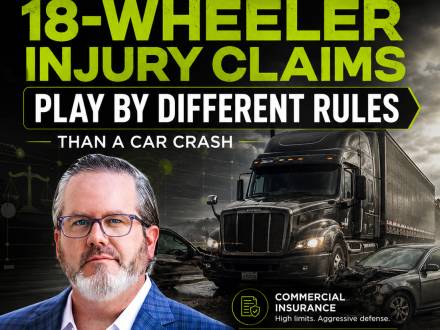
Understanding why my injury claim against an 18 wheeler is different from a regular car crash often becomes urgent the moment the shock wears off and the real pressure begins—medical bills, missed work, and constant calls from insurance adjusters. For victims of commercial truck crashes, the situation rarely feels simple or "routine," even though it is often treated that way at first glance.
The core problem is this: an 18-wheeler accident is not a single-issue dispute between two drivers. It is a layered system involving corporate employers, federal safety rules, multiple insurance policies, and technical evidence that most people never even hear about at the scene of the crash.
What makes this especially difficult is the timing. While you are focused on recovery, the trucking side is often already organizing records, reviewing driver logs, and preparing its version of events. This early imbalance is something most victims are never warned about, yet it can quietly shape the entire direction of a claim.
Seldom discussed—but critically important—is how responsibility in these cases is often spread across several parties who may not even be in the police report. That means the "obvious answer" after a crash is frequently incomplete.
This article breaks down these hidden differences in plain language, so you can understand what is really happening behind the scenes and why your next steps matter immediately.
The Core Problem
The real issue is not the crash—it’s the system behind it
At the surface level, most victims assume their situation is straightforward: a large truck caused a serious accident, so the claim should work like any other car crash. But this assumption hides the real problem. The true issue behind why my injury claim against an 18 wheeler is different from a regular car crash is that you are no longer dealing with a simple driver-versus-driver dispute—you are dealing with a structured corporate and regulatory system designed to control liability from the start.
This matters because your natural expectation is fairness based on what you saw happen. But the legal and insurance system does not operate on "what feels obvious." It operates on responsibility being divided, documented, and often disputed across multiple parties.
Why victims misread what actually happened
In the moment of impact, everything looks simple: one truck, one impact, one cause. But this is where a dangerous blind spot forms. Victims often believe the truck driver alone determines the outcome of the claim. In reality, the driver is only one piece of a much larger structure that may include the trucking company, a third-party maintenance provider, and even a cargo loading contractor.
This misunderstanding leads many people to underestimate the complexity of their case during the most critical early days—when evidence and strategy matter most.
The hidden pressure most victims don’t see
Another overlooked reality is time pressure. While victims are focused on pain, recovery, and basic survival, trucking companies are often focused on documentation, compliance records, and internal review. This creates an early imbalance that quietly shapes the entire claim.
Expert insight most people miss
One of the most underestimated dynamics is this: liability in 18-wheeler cases is often built or weakened before a lawyer is even involved. That means early assumptions—about fault, severity, or "clear evidence"—can be misleading if they are not supported by technical data like driver logs, maintenance records, and electronic tracking systems.
This is why the difference between a truck crash and a car crash is not just scale—it is structure, timing, and control of information.
A Hidden Dynamic or Overlooked Factor
The 72-hour "evidence compression" window most victims never hear about
One of the least discussed realities in commercial trucking cases is something that quietly shapes the entire direction of a claim within the first few days: evidence does not just "exist" in these cases—it degrades, gets rewritten in interpretation, or becomes strategically controlled very quickly. This is a key reason why my injury claim against an 18 wheeler is different from a regular car crash.
In most car accidents, evidence is relatively static: photos, a police report, and two drivers’ statements. But in an 18-wheeler crash, the situation is dynamic. Multiple digital systems begin recording and updating immediately after the collision, including electronic logging devices, GPS tracking, and onboard event recorders.
Why timing—not just facts—controls outcomes
What most victims do not realize is that trucking companies often initiate internal reviews almost immediately. This is not necessarily wrongdoing—it is standard procedure under federal safety rules. However, it creates a powerful timing imbalance.
Within a very short period, critical data can be:
- Overwritten by automated logging cycles
- Interpreted internally before independent review
- Stored across multiple systems owned by different contractors
This is why early documentation matters so much in understanding why truck accident injury claims differ from regular car crash cases—the evidence is not fixed; it is time-sensitive and system-dependent.
The overlooked issue: data is not neutral or centralized
Another hidden factor is fragmentation. A single trucking incident may involve:
- A trucking company managing driver records
- A third-party logistics firm handling cargo
- A separate maintenance contractor holding repair logs
Each entity controls only part of the truth. That means no single file contains the full picture of what happened.
For federal context, the U.S. Federal Motor Carrier Safety Administration outlines how carriers must maintain operational and safety records, including driver hours and compliance data:
FMCSA Regulations Overview
Why this creates real pressure for victims
For injured individuals already dealing with pain, missed work, and financial stress, this hidden structure creates an invisible disadvantage. While they are focused on recovery, the system is already organizing and distributing the evidence across multiple custodians.
This is the overlooked dynamic: in trucking claims, control of information often matters as much as the crash itself.
Stakes and Consequences
Financial consequences: the cost of underestimating the claim
When someone misunderstands why my injury claim against an 18 wheeler is different from a regular car crash, the most immediate risk is financial. Truck accidents often involve severe injuries—spinal damage, head trauma, or multiple surgeries—which means recovery is not measured in weeks, but months or years.
If the case is treated like a standard car crash, victims often accept early settlement offers that only cover immediate hospital bills. For example, a working parent who returns home expecting recovery may soon realize they cannot physically return to their job in construction or driving. Without long-term compensation built into the claim, income loss quietly turns into ongoing financial instability.
Legal consequences: missing responsibility where it actually lies
Another major risk is legal misidentification of responsibility. In a typical car crash, fault is usually straightforward. But in an 18-wheeler case, liability may extend beyond the driver to the trucking company or even maintenance providers.
If this is missed, the claim becomes incomplete. That means fewer insurance sources are accessed, reducing total compensation. This is a common outcome when victims assume the case is simply a "bigger version" of a car accident rather than a structured liability system.
Emotional consequences: prolonged stress and uncertainty
There is also a psychological burden that builds over time. Victims often describe feeling stuck—medical recovery is slow, bills continue to arrive, and communication from insurers feels confusing or dismissive. When the claim is not handled correctly early on, this uncertainty can last for years, creating constant stress for both the injured person and their family.
Long-term consequences: life after the settlement
The most serious impact appears later. A rushed or incomplete settlement can quietly shape the next 10–20 years of a victim’s life. Ongoing medical treatment, lost career progression, and reduced earning capacity can become permanent realities.
This is why understanding the difference in 18 wheeler injury claim vs regular car crash claims is not just a legal detail—it is a life outcome issue. A mistake early in the process can permanently limit financial recovery and future stability.
A Framework or Guidance Path
A practical decision framework for 18-wheeler injury claims
When people start understanding why my injury claim against an 18 wheeler is different from a regular car crash, the next challenge is not information—it is direction. Most victims know something is "different," but they don’t know what to do with that realization. This framework simplifies the process into clear, structured decisions that reduce mistakes early on.
Step 1: Stabilize the medical and factual record first
Your first priority is not negotiation—it is documentation.
- Get consistent medical evaluation and follow-ups
- Ensure every symptom is recorded, even if it seems minor
- Preserve all accident-related paperwork and communication
Why it matters: Truck crash injuries often evolve over time. Early medical gaps are later used to minimize claims.
Step 2: Treat the crash as a multi-party system, not a single driver event
Instead of asking "who hit me?", the correct question is:
Who contributed to this crash systemically?
This may include:
- Driver behavior
- Trucking company practices
- Maintenance or inspection failures
- Cargo loading issues
This is a core distinction in understanding how 18 wheeler injury claims differ from regular car crash claims.
Step 3: Secure and protect evidence early
Evidence in these cases is time-sensitive and fragmented. Key items include:
- Electronic logging device data
- Vehicle maintenance records
- GPS and route tracking data
- Scene photos and witness statements
What to avoid: Assuming police reports contain everything. They rarely do in trucking cases.
Step 4: Evaluate long-term impact before accepting any resolution
Before making decisions, assess:
- Future medical needs
- Work limitations
- Rehabilitation timelines
- Family financial dependency
Why it matters: Early offers are often based on short-term costs, not lifetime impact.
Step 5: Make decisions based on full information, not pressure
Truck insurers often move quickly. But speed is not clarity. Delay pressure is common, and decisions made under pressure often lead to undervaluation.
Authoritative context
The U.S. National Highway Traffic Safety Administration (NHTSA) provides extensive crash data showing the severity and complexity of large truck collisions compared to passenger vehicles:
https://www.nhtsa.gov/road-safety
Key takeaway
This framework exists because why my injury claim against an 18 wheeler is different from a regular car crash is not just a legal distinction—it is a structured decision problem. Once you see the system clearly, your choices become more controlled, deliberate, and less vulnerable to early mistakes.
Show What a Strong Outcome Looks Like
Two very different futures after an 18-wheeler crash
When people first search why my injury claim against an 18 wheeler is different from a regular car crash, they are usually trying to understand one thing in the background: What will my life actually look like after this case is resolved? The answer depends heavily on how early decisions are made, how well the claim is structured, and whether the full scope of harm is properly understood.
Weak outcome: short-term relief, long-term instability
In a weaker outcome, the case is treated like a standard accident. The focus stays on immediate bills and visible injuries. A settlement may come faster, but it often misses deeper realities.
That usually leads to:
- Financial strain returning months later when treatment continues
- Loss of income not fully replaced because future work limits were ignored
- Ongoing stress from unresolved medical issues
- Feeling of "closure" that quickly turns into regret
In this scenario, victims often feel they resolved the case quickly, but later realize the compensation did not match the true cost of recovery. This is a common result when 18 wheeler accident claims are treated like regular car crash cases instead of complex, multi-party systems.
Strong outcome: structured recovery and long-term protection
In a stronger outcome, the claim is approached with full awareness of its complexity from the beginning. Evidence is preserved early, multiple responsible parties are identified, and future losses are properly evaluated.
This leads to:
- Financial stability that reflects both current and future needs
- Clear understanding of medical recovery timelines and support
- Reduced emotional pressure because uncertainty is controlled
- Better long-term planning for work, family, and health
Most importantly, the victim is not forced into survival mode after the case ends. Instead, the outcome creates predictability—something that is often more valuable than the settlement itself.
Why timing and structure change everything
The difference between these two outcomes is not luck. It is timing, preparation, and whether the case is treated as a system or a simple crash. That distinction directly shapes compensation, stress levels, and long-term security.
For broader context on injury impact and long-term health outcomes after severe trauma, see the CDC’s injury data resources:
https://www.cdc.gov/injury/index.html
Final insight
The real meaning of why my injury claim against an 18 wheeler is different from a regular car crash becomes clear here: the structure you apply early determines the life you live later.
FAQs — Understanding 18-Wheeler Injury Claims
1. Why is my injury claim against an 18 wheeler different from a regular car crash?
Your injury claim is different because it involves multiple potentially responsible parties, not just one driver. A trucking company, maintenance contractor, or cargo loader may also share responsibility. This creates a layered system of liability that does not exist in normal car accidents. It also means more evidence, more insurance coverage, and more complex evaluation of damages.
2. What makes a truck accident claim more complicated than a car crash claim?
A truck accident claim involves federal safety rules, company policies, and commercial insurance systems. These cases often require reviewing driver logs, maintenance records, and compliance history. Unlike a simple car crash, the truth is usually spread across several systems, not one police report.
3. Why do trucking companies respond so quickly after a crash?
They respond quickly because critical data and internal records must be reviewed immediately after a collision. This includes driving hours, vehicle performance data, and maintenance logs. This early response does not mean wrongdoing—it reflects the structured way commercial fleets manage risk. However, it also means evidence is processed long before most victims understand what happened.
4. How does timing affect my injury claim against an 18 wheeler?
Timing is extremely important because key evidence can change in availability or interpretation within days. Early medical documentation, accident reports, and witness statements become the foundation of the entire case. Delays can make it harder to prove how serious the crash was or who was responsible.
5. Can I still recover compensation if I didn’t act immediately after the crash?
Yes, but delays can make the process more difficult. Evidence may be harder to secure, and early assumptions about the crash may already be recorded by other parties. The sooner a claim is properly organized, the stronger the overall position becomes.
6. Why are truck accident injuries usually more severe than car crashes?
Truck accidents involve significantly larger vehicles with greater force on impact. This often leads to long-term injuries such as spinal damage, brain trauma, or multiple fractures. These injuries require longer recovery times and more extensive financial planning than typical car crash injuries.
7. What is the biggest mistake people make in truck accident claims?
The biggest mistake is treating it like a standard car crash and focusing only on immediate expenses. This approach often ignores long-term medical needs and future income loss. It can lead to settlements that feel sufficient at first but fall short over time.
8. Why is my injury claim against an 18 wheeler different when it comes to insurance?
Truck accident cases often involve multiple insurance policies with different coverage levels. This includes insurance for the driver, the trucking company, and sometimes third-party contractors. These layers make the claim more complex but also more financially significant when handled correctly.
9. How long do 18-wheeler injury claims usually take to resolve?
They typically take longer than car accident cases because of deeper investigation requirements. Multiple parties must be evaluated, and technical data often needs expert review. While timelines vary, complexity is the main reason these cases are not resolved quickly.
10. What should I focus on first after an 18-wheeler accident?
The first focus should always be medical care and accurate documentation of injuries. After that, preserving evidence and understanding the full scope of responsibility becomes important. Early decisions matter because they shape how the entire claim develops over time
Conclusion
When you step back and look at the full picture, why my injury claim against an 18 wheeler is different from a regular car crash becomes much clearer. These cases are not just about a larger vehicle or a more severe impact—they are about a completely different system of responsibility, evidence, and timing.
Behind the scenes, multiple parties may share liability, critical data can be time-sensitive, and early assumptions often shape the direction of the entire claim. The real risk for most victims is not just the crash itself, but misunderstanding how quickly the process begins moving without them. That gap in understanding is where financial loss, delayed recovery, and incomplete compensation often begin.
Staying in uncertainty usually leads to reactive decisions—accepting early answers, overlooking deeper responsibility, or underestimating long-term needs. Moving forward with clarity means recognizing the structure of these claims early, understanding what evidence matters, and making informed choices before pressure builds.
The difference is significant: one path leaves you guessing and exposed, while the other gives you control, direction, and a clearer view of what recovery actually requires.
If you are dealing with an 18-wheeler injury situation and are unsure how your claim should be handled, it is important to get clarity before making decisions that cannot easily be undone. A confidential conversation can help you understand where your case stands, what risks may be present, and how to approach the next steps with greater confidence and protection.
Kisner Law Scholarship Program


Kisner Law is Committed to Bettering Your Future.
Please complete the form below or contact us at 240-459-0097 for a free consultation.
 The use of the Internet or this form for communication with the firm or any individual member of the firm does not establish an attorney-client relationship. Confidential or time-sensitive information should not be sent through this form.
I have read and understand the Disclaimer and Privacy Policy.










Free Consultations 240-459-0097
From our office in Hyattsville, Maryland, Kisner Law represents injury victims and their families throughout the Anne Arundel, Montgomery County, and Prince George's County areas, including, but not limited to Annapolis, Beltsville, Bowie, College Park, Crofton, Greenbelt, Landover, Lanham, Laurel, Largo, Mount Rainier, Riverdale Park, Silver Spring, Takoma Park, and Upper Marlboro. We also serve clients across the bordering counties as well as those in Washington, D.C.
Results listed are not a guarantee or indication of future case results.
Kisner Law
8401 Corporate Drive, Suite 650, Hyattsville, MD 20785
240-459-0097



Follow us on Social Media: